

The name: what is a preá?
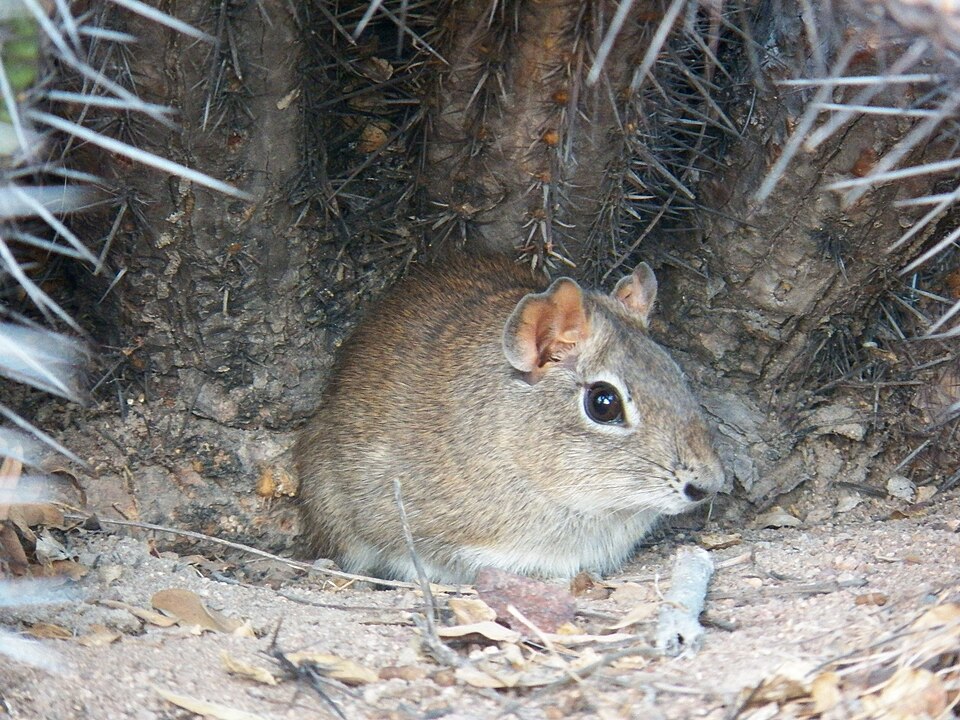

A preá (say preh-AH) is a small rodent from South America. In the Brazilian Northeast it is everywhere: in the dry scrubland, at the edge of the roads, running between the cacti.
Meet the preá
- Family. It belongs to the cavy family, Caviidae, the same family as the guinea pig. Despite the size and the whiskers, it is not a rat.
- The Northeast's own. The species of the Northeast is Galea spixii. It is the most abundant mammal of the caatinga, the semi-arid scrubland found only in Brazil.
- Looks. A long, round body with a grey-brown back and a light belly, a big head with big dark eyes, and short, round ears.
- Habits. It lives in groups, and it is most active at dawn and dusk, when the heat of the day eases. It eats leaves, shoots, fruits and roots of low plants.
- Born ready. After about 50 days of pregnancy, a mother has from one to five pups, which are born with fur and with their eyes open.
- Tough. It tolerates a wide range of conditions, as long as it has open land, which is why it is so common across its range.
The word
Preá comes from Tupi, one of the native languages of Brazil, where the animal was called apereá. Some regions still say apreá.
Why Preá
Preá was created in the Brazilian Northeast, and its authors wanted a name from home. The Go language has a rodent for a mascot, the gopher. A framework for Go got a rodent from the caatinga.
The name also fits the idea. A preá is small, lives in groups and gets by with little. A Preá app is a group of small preás that each do one thing.
Look closely at the logo
The logo is a preá sitting between curly braces, { preá }: a little animal inside a block of code.
Sources
- Spix's yellow-toothed cavy, Wikipedia
- Galea spixii, Mammal Diversity Database
- Characterization of the estrous cycle in Galea spixii, Pesquisa Veterinária Brasileira
- Preá, Dicio, Portuguese dictionary